Air fryers are one of the few kitchen appliances that actually deliver on their promise. They produce genuinely crispy results faster than a conventional oven, with less oil than deep frying, and they preheat in under three minutes. But the market is flooded with options at wildly different price points, and it’s easy to buy the wrong size or get seduced by features you’ll never use.
Basket vs Oven-Style: Which Design Is Right for You?
This is the first decision — and it matters more than brand.
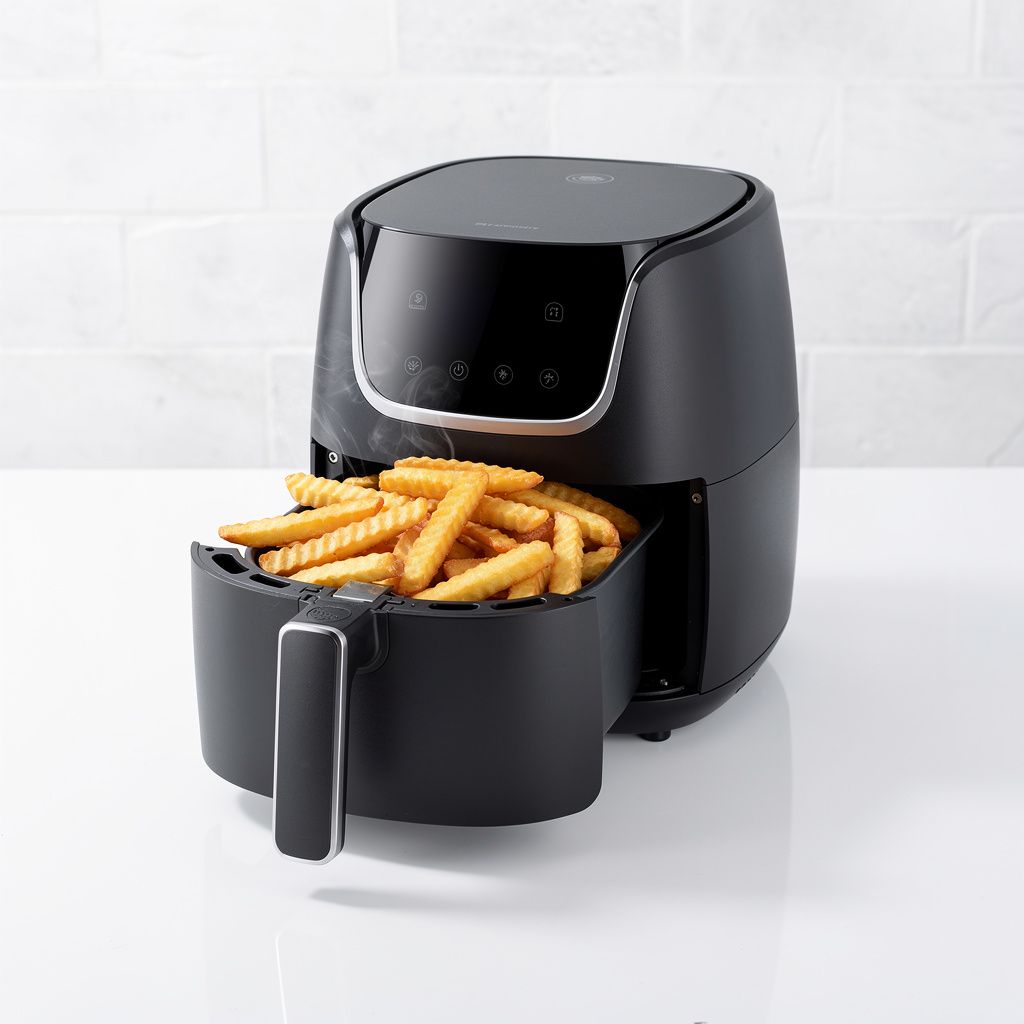
Basket Air Fryers
The classic design: a removable drawer with a perforated basket insert. Hot air circulates around food from all sides.
Pros:
- Compact footprint on the counter
- Faster preheating and cooking (smaller chamber)
- Easier to shake and toss food mid-cook
- Generally less expensive at equivalent quality
Cons:
- Limited capacity — cooking in batches for more than 2 people
- Less versatile — mostly for air frying, some models do dehydrating
- Basket shape limits what you can cook (no sheet pan roasting)
Best for: Singles, couples, or anyone primarily air frying snacks, proteins, and frozen foods.
Oven-Style (Toaster Oven) Air Fryers
A countertop oven with an air fry mode — multiple racks, a door that opens like a conventional oven, and often a rotisserie function.
Pros:
- Large capacity — full sheet pan batches, whole chickens
- More versatile — bake, broil, toast, dehydrate, roast
- Visible food through the glass door
- Better for sheet-pan-style cooking
Cons:
- Large footprint — takes up significant counter space
- Slower to preheat than basket models
- More expensive at comparable quality
- Takes longer to clean (more interior surface)
Best for: Families of 3+, anyone who wants to replace their toaster oven, cooks who want to roast whole birds or large batches.
Size Guide: How Much Capacity Do You Actually Need?
Undersized air fryers are the #1 source of buyer regret. Food needs space around it for air to circulate — overcrowding defeats the purpose and produces steamed, not crispy, results.
| Household Size | Recommended Capacity | Notes |
|---|---|---|
| 1–2 people | 3–4 quart basket | Most compact option; handles 2 chicken thighs, generous portions of fries |
| 2–4 people | 5–6 quart basket | The sweet spot for most households |
| 4+ people | 7–8 quart basket OR oven-style | Avoids constant batching |
| Batch cooking | 8 quart+ or oven-style | Essential if you prep meals for the week |
The rule: When in doubt, go one size up. A 5-quart air fryer costs about $20 more than a 3-quart model. The time saved from not cooking in batches is worth far more than that.
Features That Actually Matter
Temperature Range
Look for a range of at least 180°F–400°F. The low end matters for dehydrating and keeping food warm. The high end (400°F+) is what gets foods properly crispy.
Some models max out at 380°F. This works fine but limits how aggressively you can crisp foods.
Preheat Time and Indicator
Some air fryers preheat in 2–3 minutes, others in 5–7. The difference matters if you use your air fryer daily. Models with a preheat indicator (a chime or light when ready) take the guesswork out.
Ease of Cleaning
The basket and drawer should be non-stick coated and dishwasher-safe. If they’re not, you’ll find yourself hand-washing baked-on grease repeatedly. Check this before buying — it’s not universal even on expensive models.
Auto Shut-Off and Timer
Essential. All modern air fryers have this, but verify. An air fryer that keeps running after the timer ends will overcook food.
Wattage
Most basket air fryers run 1500–1700 watts. Oven-style models run 1700–1800 watts. Higher wattage generally means faster preheating and more even cooking. Don’t pay extra for wattage marketing — 1500W is sufficient for most cooking.
Features That Don’t Matter (Marketing Fluff)
Preset Programs
Every air fryer marketing deck emphasizes the 10, 12, or 18 preset cooking programs (fries, chicken, fish, etc.). In practice, these are temperature and time presets that you’ll quickly stop using. Real food varies too much in size, thickness, and starting temperature for presets to be reliable. After the first week, most users switch to manual time and temperature controls.
Exception: The preheat preset is genuinely useful on models that have it.
App Connectivity and WiFi
Air fryers with companion apps and WiFi control exist. They add $30–$60 to the price and almost no one uses them after the novelty wears off. You’re standing 5 feet from the air fryer — you don’t need to control it from your phone.
Built-In Food Thermometer
A few premium models include a probe thermometer. Useful concept, but the implementation is usually awkward and you likely already own a reliable instant-read thermometer. Skip it.
”Smart” Temperature Sensing
Marketing language for basic PID temperature control, which all quality air fryers have. Not a differentiating feature.
Price Tiers and Value
Under $60 — Budget Tier
Models: Cosori 4.7-quart, Ninja 4-quart Air Fryer
You get solid air frying performance, non-stick basket, timer, and auto shut-off. Build quality is serviceable but not durable. Fan noise tends to be louder. These work well for light use.
Buy here if: You’re trying air frying for the first time, on a tight budget, or use it occasionally.
$60–$100 — Best Value Tier
Models: Cosori Pro II 5.8-quart, Ninja Air Fryer Max XL
This is where you get the best performance per dollar. Better build quality, larger capacity, and quieter fans. Baskets are typically dishwasher-safe with more durable coatings. The Cosori Pro and Ninja Max XL consistently receive the highest long-term reliability ratings in this tier.
Buy here if: You’ll use it 3+ times a week and want something that lasts 3–5 years.
$100–$150 — Premium Basket
Models: Philips 3000 Series, Ninja Foodi 6-quart
Premium basket models offer better build quality, longer warranties, and marginally better cooking performance. Philips in particular has a strong reputation for durability. The performance gap versus the $70–$100 tier is real but modest.
Buy here if: You want a flagship basket air fryer that will last 5+ years.
$150–$250 — Oven-Style
Models: Breville Smart Oven Air Fryer, Ninja Foodi XL Pro Air Oven
Oven-style models in this tier replace your toaster oven entirely. The Breville Smart Oven Air Fryer is the benchmark in this segment — precise temperature control, excellent build quality, and versatility that genuinely justifies the price.
Buy here if: You need large capacity, want to replace your toaster oven, or regularly cook for a family.
The Bottom Line
For most households, the 5–6 quart basket tier at $60–$100 is the right answer. It handles daily air frying for 2–4 people without batching, fits on the counter without dominating it, and delivers performance that the premium models can’t improve meaningfully.
If you’re cooking for a family of 4+ or want to replace your toaster oven, move to an oven-style model — the Breville Smart Oven Air Fryer is the default recommendation at the premium end.
Skip the presets, skip the WiFi, and prioritize a dishwasher-safe basket over anything else on the feature list.